
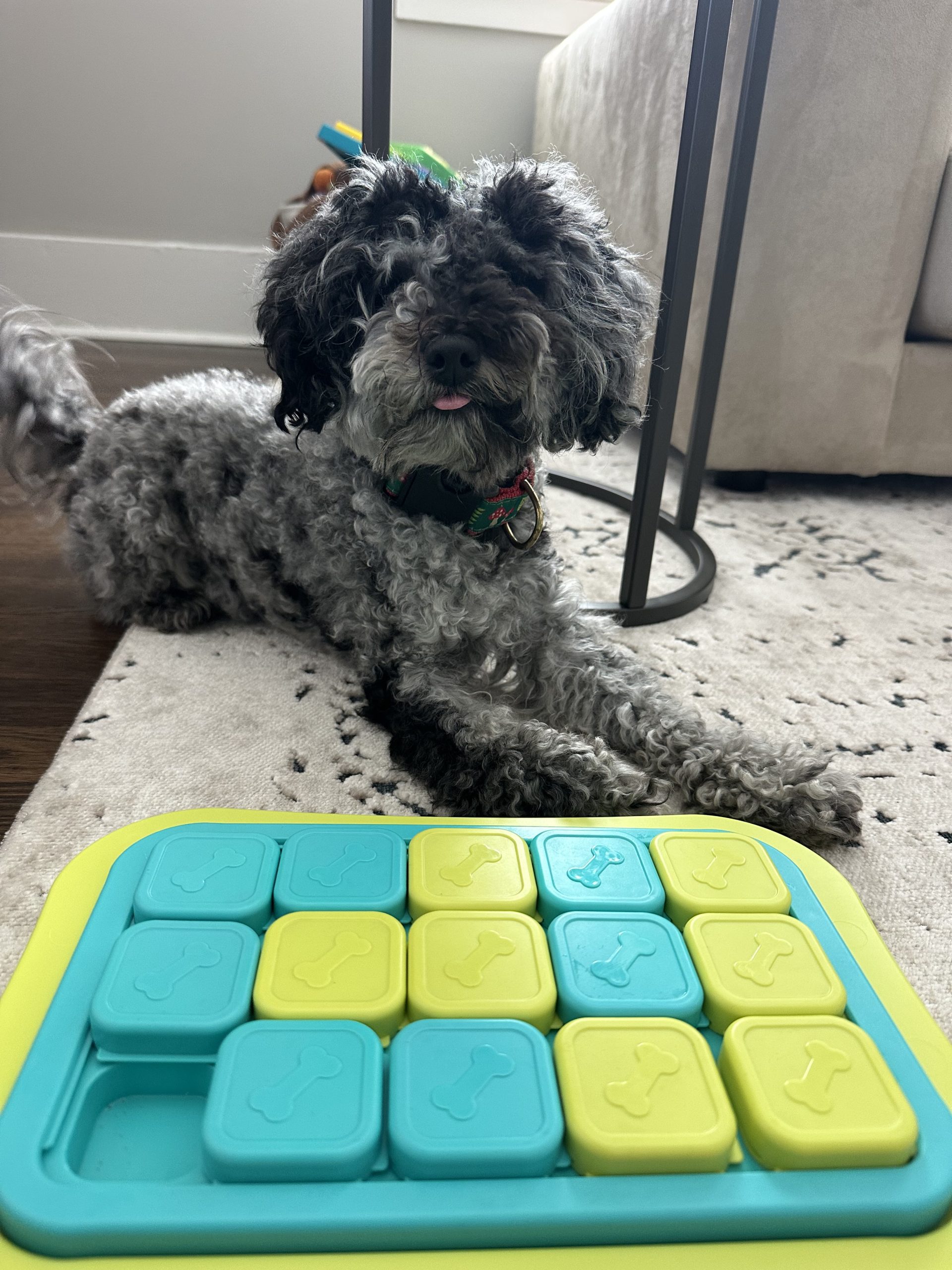
You bought the toys.
The puzzle feeder. The chew toy. The squeaky toy your dog loved for two days and then ignored.
At first, your dog was excited. They engaged. They played. And then, slowly, the interest faded.
Now the toys sit in a basket while your dog looks at you, waiting for something more.
If this sounds familiar, you are not doing anything wrong.
You are simply missing one key piece.
Rotation.
Dogs do not need more toys. They need the right toys used in the right way at the right time.
For busy Atlanta dog parents, this is where things often break down. You want to provide enrichment. You care about your dog’s happiness. But your schedule does not allow you to constantly think about what to introduce, when to introduce it, and how to keep it engaging.
That is where a structured approach to enrichment makes all the difference.
Why Dogs Get Bored With Toys
Dogs experience novelty differently than humans.
When a toy is always available, it loses its value. The brain no longer sees it as something worth exploring. The stimulation fades because there is no sense of discovery.
Research in animal behavior shows that novelty plays a key role in engagement. When something feels new, the brain becomes active. When something is always present, the brain begins to ignore it.
This is why your dog may lose interest in toys that once kept them busy.
It is not the toy.
It is the lack of rotation.
What Rotation Does for Your Dog
Rotating toys reintroduces novelty.
When a toy disappears and then returns days or weeks later, your dog experiences it as something new again. Their curiosity returns. Their engagement increases.
But rotation does more than just bring back excitement.
It supports mental stimulation.
Different toys activate different parts of your dog’s brain.
Some toys encourage problem solving.
Some encourage licking, which can calm the nervous system.
Some encourage chewing, which releases stress.
Some engage scent work and natural hunting instincts.
When these activities are rotated, your dog receives a more complete form of enrichment.
This creates balance.
Why Mental Stimulation Matters as Much as Exercise
Many dog parents focus on physical activity.
Walks. Playtime. Trips to the park.
These are important. But mental stimulation is equally critical.
A dog that is mentally engaged is often calmer than a dog that has only been physically exercised.
Sniffing, problem solving, and interactive play activate your dog’s brain in ways that reduce stress and increase satisfaction.
This is especially important for dogs living in busy cities like Atlanta. There is constant stimulation from the environment. Without structured outlets, that stimulation can turn into restlessness.
Enrichment provides a healthy way for dogs to process that energy.
The Challenge for Busy Dog Parents
You understand that enrichment matters.
The challenge is consistency.
You may rotate toys occasionally, but it is hard to maintain a structured system. Work schedules, meetings, and daily responsibilities make it difficult to think about enrichment on a regular basis.
You may find yourself asking questions like:
When should I rotate toys
What type of enrichment does my dog need next
Am I doing enough
This is where many dog parents begin to feel overwhelmed.
You want to do the right thing. You simply need a system that works with your life.
How a Structured Enrichment System Solves the Problem
At Praline’s Backyard Dog Services, we approach enrichment as a system, not a one time activity.
It begins with your Dog Lifestyle Consultation.
During this consultation, your dog is introduced to four enrichment toys. Each one is selected to engage a different form of enrichment.
This becomes your dog’s foundation.
Instead of guessing what your dog needs, you now have a structured starting point.
From there, we build.
Monthly Toy Rotation That Keeps Your Dog Engaged
Each month, your dog is introduced to a new enrichment toy of the month.
This is not random.
It is intentional.
We rotate toys to ensure your dog continues to experience novelty while also maintaining familiarity with previous toys.
This balance keeps your dog engaged without overwhelming them.
Over time, your dog builds a library of enrichment experiences that support their mental and emotional wellbeing.
This is how enrichment becomes part of their lifestyle.
Why This Matters for Your Dog’s Behavior
When dogs receive consistent mental stimulation, their behavior changes.
They settle more easily at home.
They are less likely to engage in destructive behavior.
They become more focused during walks.
This is not because they are tired in the traditional sense.
It is because their needs have been met.
A dog that has engaged their brain feels satisfied.
The Emotional Side You May Not Talk About
There is also something deeper happening.
When you see your dog calm, content, and engaged, your own stress decreases.
You stop wondering if you are doing enough.
You stop feeling like you are constantly trying to make up for busy days.
You begin to trust that your dog’s routine is working.
That peace of mind matters.
Because a balanced life is a happy life.
For both of you.
A Simple Plan to Get Started
If you want to improve your dog’s enrichment routine, start with a few simple steps.
Remove most toys from constant access.
Introduce one or two toys at a time.
Rotate toys every few days or weekly.
Incorporate enrichment into your dog’s daily routine.
If maintaining this system feels difficult, you are not alone.
That is exactly why structured support exists.
The Outcome You Want
You want a dog who is engaged, calm, and fulfilled.
You want to feel confident that their needs are being met even when your schedule is full.
Most of all, you want a routine that works.
If you are ready to create that routine, start with a Dog Lifestyle Consultation.
From there, we will build an enrichment plan that includes toy rotation, structured walks, and ongoing support designed specifically for your dog.
Because your dog does not need more things.
They need the right experiences.
And when those experiences are consistent, everything changes.