

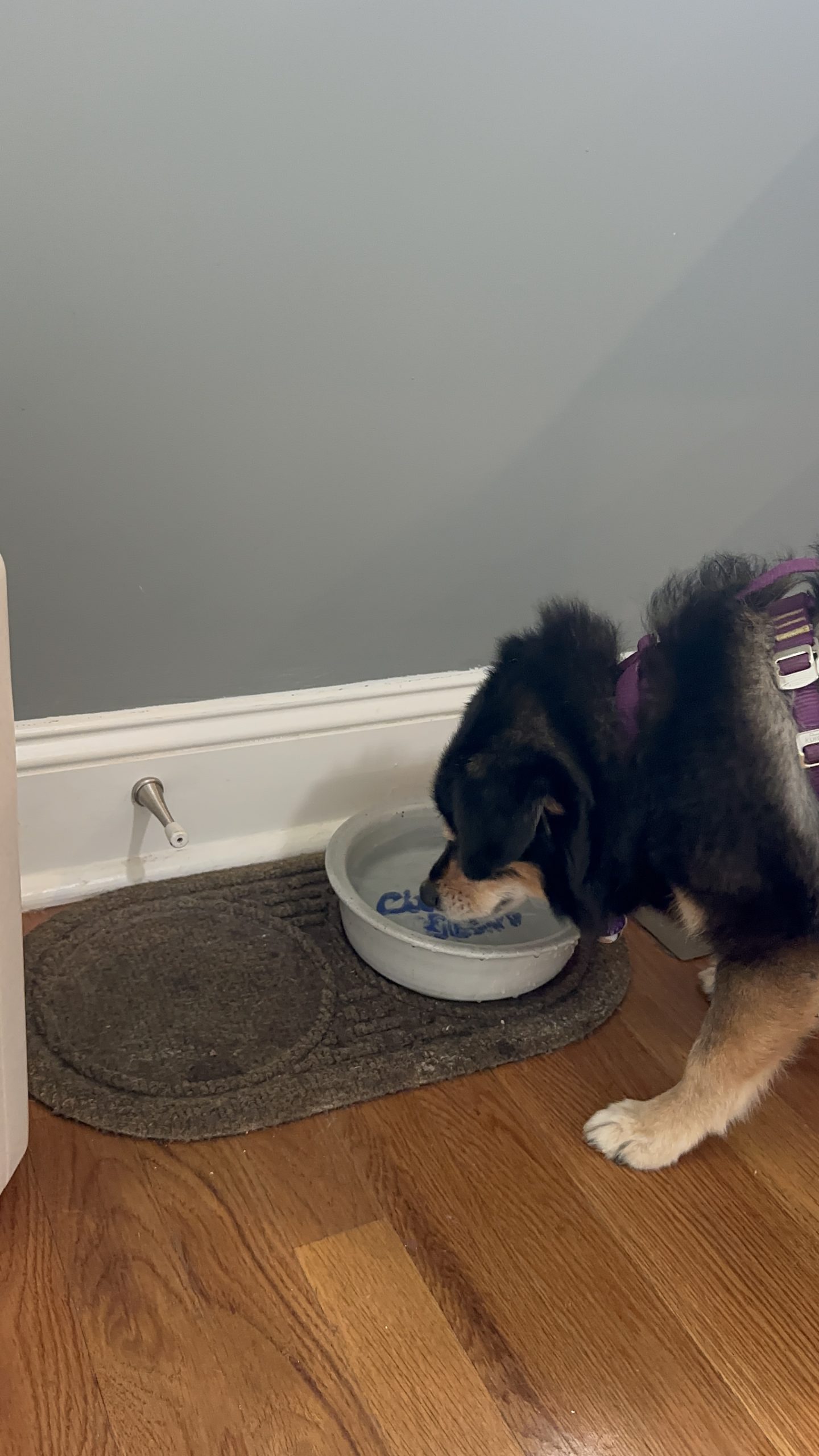
You fill the water bowl before you leave for work. It feels like enough. In an Atlanta August, it isn’t, and the reason has less to do with effort and more to do with biology most dog parents were never taught.
Why Your Dog Can’t Just Sweat It Off
Here’s something worth knowing. Your dog doesn’t sweat the way you do. Humans cool off through sweat glands covering almost the entire body. Dogs only have those glands in their paw pads, which barely make a dent in cooling a whole body down. Instead, dogs rely almost entirely on panting, pulling air across the moist surfaces of the tongue, mouth, and airway so that evaporation carries heat away from the inside out.
It’s a clever system, but it only works if two things are true. Your dog needs enough water in their body to produce that moisture in the first place, and the air around them needs to actually be dry enough to let evaporation happen.
The Humidity Problem Atlanta Doesn’t Let You Ignore
This is where Atlanta works against your dog in a way a lot of dog parents don’t realize. Evaporation, the entire mechanism panting depends on, slows down as humidity rises. Once humidity climbs past roughly 35 percent, your dog’s ability to cool off through panting starts to weaken. Past 80 percent humidity, it’s barely functioning at all.
According to veterinary guidance, dogs can start overheating at a temperature as mild as 80 degrees if humidity is above 70 percent. That’s not a rare heat wave. That’s a normal Tuesday afternoon in Atlanta in August. The danger isn’t just the number on the thermometer. It’s the number on the thermometer combined with the air your dog is actually trying to breathe through.
Why “Just a Bowl” Falls Short
Most Atlanta dog parents aren’t leaving a water bowl outside all day. It’s sitting right there in the kitchen or by a window, which feels safe because it’s indoors. Here’s the part that catches people off guard. A spot that gets soft, gentle light all winter can turn into a hot afternoon spotlight by August. The sun moves higher and stronger through the same window, and a bowl that’s been sitting in that exact spot for years quietly starts warming up for hours every day, without you ever moving it or noticing anything looks different.
Warm water is far less appealing to drink than cool water, which means your dog may end up drinking less exactly when their body needs more. And that same warm, sunlit water is an easy place for bacteria and algae to build up, faster than most people expect.
The tricky part is that you won’t necessarily see the problem. An empty bowl is an obvious sign. A bowl of warm, slightly dirty water sitting in what used to be a perfectly harmless spot is not.
Three Small Changes That Make a Real Difference
Add ice cubes to the water. This keeps the temperature down far longer than plain water alone, which encourages your dog to actually drink more during the hottest stretch of the day. Many dogs also enjoy the ice itself, which turns hydration into a small moment of enrichment instead of just a chore.
Check where the sun actually lands in the summer. The spot that worked all winter may not work in August, even indoors. Take a walk through your home in the afternoon and notice which windows let in direct sun, then move the bowl a few feet out of that path if it’s sitting in it. It’s a small shift that keeps the water meaningfully cooler all day.
Keep the bowl clean. Warm, stagnant water is exactly the kind of environment bacteria and algae grow in fastest, and summer heat speeds that process up considerably. A dirty bowl can lead to stomach upset, which ironically causes more fluid loss through vomiting or diarrhea at the exact moment your dog can least afford it.
What This Looks Like During a Private Walk
During the hottest months, our specialists aka dog walkers treat water access as part of the visit itself, not an afterthought. That means checking water temperature and cleanliness, choosing shaded rest points along routes through spots like Grant Park, and watching how your dog is panting as an early signal that it’s time to slow down or head back, before it ever becomes a real problem.
What Happens When This Gets Overlooked
Heat stroke in dogs isn’t rare, and it moves fast. Once a dog’s internal temperature climbs to around 105 degrees, the body starts struggling to regulate itself at all, and symptoms can escalate to seizures and organ damage within a short window. Senior dogs, dogs with flat faces, and dogs who simply didn’t have enough water on board that day are all at higher risk. This isn’t meant to scare you. It’s meant to explain why three small habits matter so much more than they seem to on the surface.
Peace of Mind, Even When You’re Not There
You shouldn’t have to become an amateur physiologist just to keep your dog safe through an Atlanta summer. A balanced life is a happy life, and part of that balance is knowing the details, the ice, the shade, the clean bowl, are already being handled by people who understand exactly why they matter, whether your dog’s midday visit takes them through Grant Park or a quiet stretch of Reynoldstown.
Ready for a Team That Sweats the Small Stuff So You Don’t Have To?
Your dog’s water bowl is a small detail with a real impact. Let’s make sure every part of your dog’s day, not just the walk, is built around what actually keeps them safe this summer.