
It is early evening on Halloween. Your dog is happily chewing a toy. Then the doorbell rings. And rings again. And again.
For many dogs, this is the loudest, strangest night of the year. Masks. Costumes. Shrieking kids. Flashlights. A bowl of candy sitting right at nose height.
If you work long hours or have plans that night, you may feel torn. You want to enjoy the holiday, and you want your dog to feel safe. You can do both. It starts with a simple plan you make before the first trick-or-treater arrives.
Why Halloween Night Is Hard for Dogs
Dogs read the world through sound and smell. On Halloween, both get overloaded at once.
A neighbor kid your dog knows may look like a stranger in a mask. A knock at the door may feel like a threat. Some dogs bark nonstop. Some hide. Some get so excited that they dash out the door the moment it opens.
That is not bad behavior. It is a dog doing their best on a very odd night.
In walkable neighborhoods like Virginia-Highland and Inman Park, the doorbell can seem to ring nonstop. In a Midtown condo, the buzzer and the knocks in the hallway can do the same thing. Either way, a plan helps.
Your Halloween Plan in 5 Steps
Write these down on a sticky note. Put it on the fridge. Share it with anyone in your home, or anyone caring for your dog that night.
1. Pick your door. Decide now who answers the door and where the dog will be when they do. A closed interior door or a baby gate between your dog and the front entry works well. Even better, set up a candy table on the porch, the driveway, or the sidewalk so the front door never needs to open. If you live in a building, think about the hallway too.
2. Set up a calm room. Choose a room far from the front door. Close the door. Add a comfy bed, a fan or white noise, and something to do, like a lick mat or a frozen treat toy. Set it up before dark so your dog is already settled when the first knock comes.
3. Keep the routine. Halloween should not cancel dinner, medicine, or the evening potty break. Walk your dog before the trick-or-treaters start. A slow, sniffy walk is a great way to help your dog settle. For potty breaks later, use a leash, even in a fenced yard. Gates get left open on busy nights.
4. Check the tags and lock up the candy. Make sure your dog’s collar and tag are on, and the microchip information is up to date. Keep candy bowls and bags high and out of reach. Chocolate, sugar free candy and gum with xylitol, and raisins can be dangerous for dogs. Wrappers can cause trouble too. If your dog eats something they should not, call your vet or an animal poison control line right away.
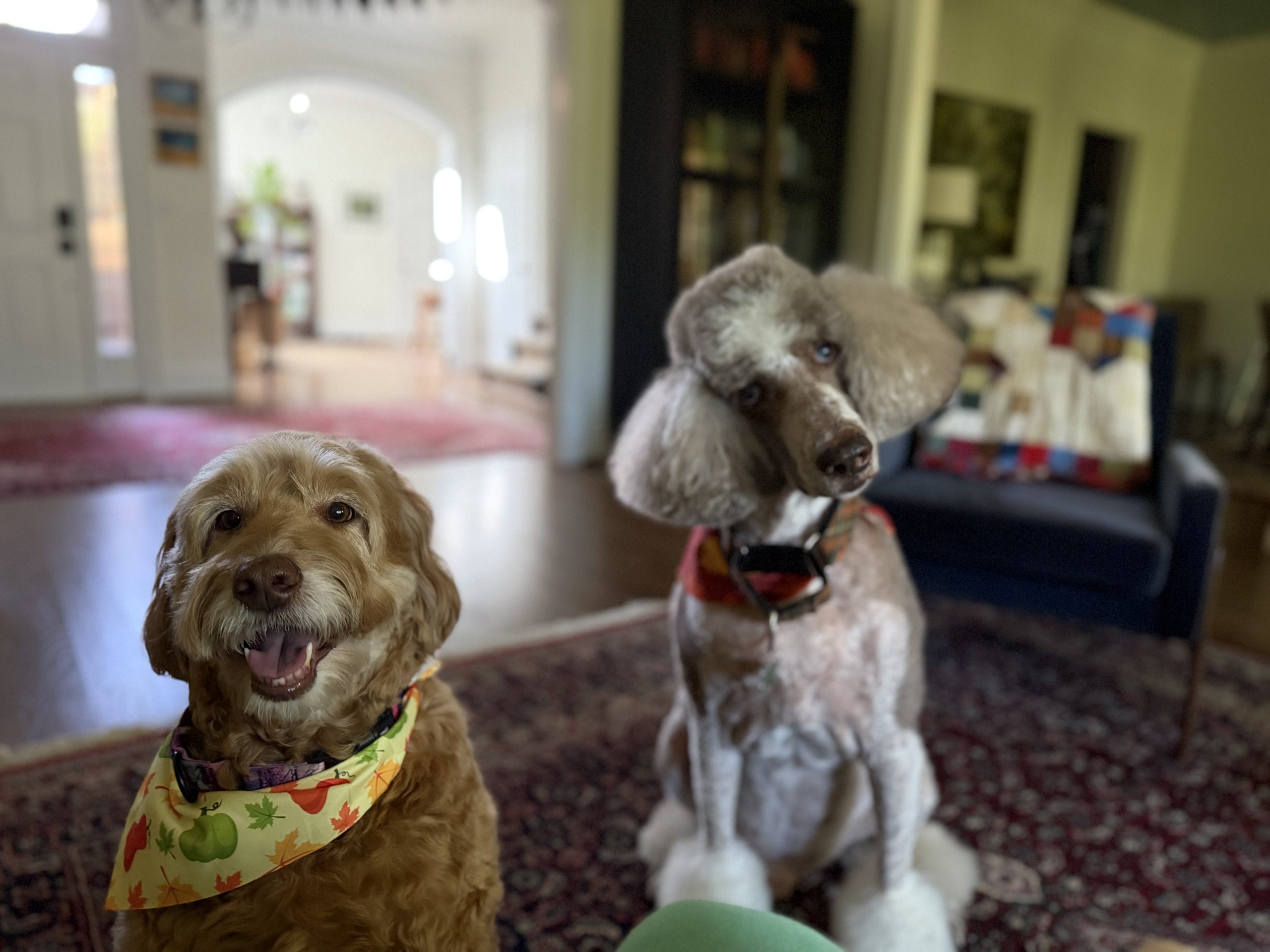
5. Watch your dog’s body language. A relaxed dog is loose and wiggly. A stressed dog may pant, pace, yawn, lick their lips, tuck their tail, or hide. If you see these signs, move your dog to the calm room. If your dog dislikes costumes, skip theirs. A bandana can be just as cute. Let them sniff masks and costume pieces in daylight so they are less surprised by the people wearing them.
We are not veterinarians. If your dog has health concerns or is very anxious, talk with your vet about what is best for them.
Ready for Calmer, Steadier Care?
Let’s talk about what support could look like for your dog this fall and all year.
[Book Your Dog Enrichment Profile call and learn what enrichment your dog likes most]