

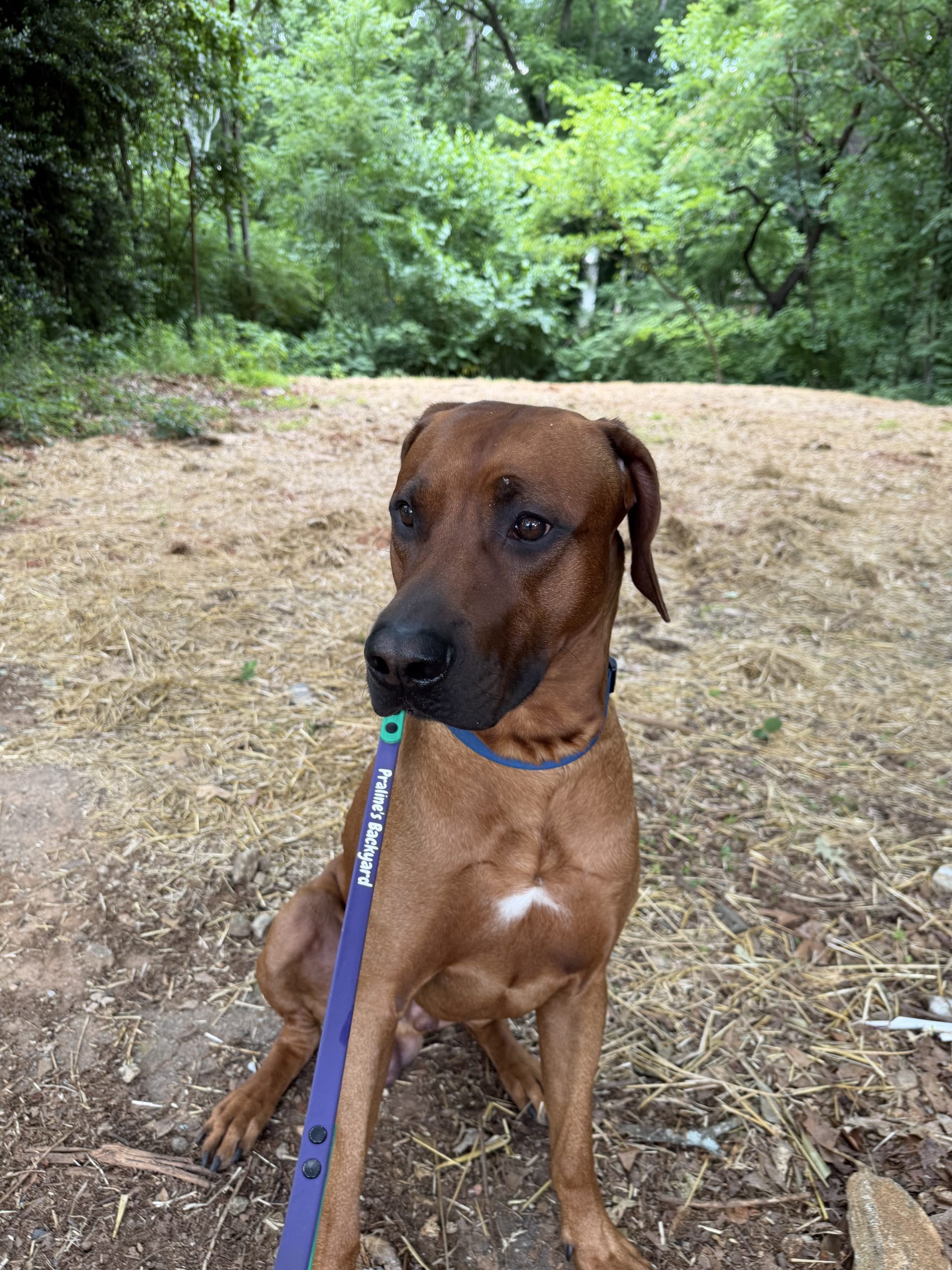
Atlanta heat can sneak up on you.
One day, your dog is enjoying a breezy walk through Grant Park. The next day, the humidity feels heavy before breakfast, the pavement warms up fast, and your dog seems tired sooner than usual.
For many dog parents, summer walking feels simple at first.
You grab the leash.
You step outside.
You plan to do the normal route.
But heat changes everything.
And if your dog takes certain medications, heat may affect them differently than you expect.
At Praline’s Backyard Dog Services, we specialize in enrichment focused dog walking for busy Atlanta dog parents. That means we do not believe every walk should look the same every day. Your dog’s age, health, medication, coat, energy level, and the weather all matter.
You want your dog to be happy, active, and safe. We are here to guide you with thoughtful care, practical education, and routines that support your real life.
Because a balanced life is a happy life.
And in Atlanta, a balanced summer routine starts with understanding how heat affects your dog.
Why Heat Can Be Dangerous for Dogs
Dogs do not cool themselves the same way people do.
People sweat across much of the body. Dogs mainly cool themselves through panting and some sweating through their paw pads. When the air is hot and humid, panting becomes less effective because the body has a harder time releasing heat.
Heatstroke is a life threatening emergency. Veterinary sources describe heatstroke as a severe rise in body temperature that can lead to neurologic problems, organ damage, and death if not treated quickly. Cornell’s Canine Health Center notes that signs can include heavy panting, drooling, vomiting, diarrhea, weakness, collapse, and more.
The scary part is that heat problems can build quickly.
A dog may look fine at the start of the walk and then suddenly slow down, pant harder, seek shade, or refuse to keep moving. Cornell lists heavy panting, seeking shade, whining, reluctance to play, and drooling as early signs that a dog may be overheating.
That is why summer walks should be planned, not guessed.
Some Dogs Are Already at Higher Risk
Some dogs need extra caution in warm weather, even if they are not taking medication.
Cornell identifies higher risk dogs as short muzzle breeds, older dogs, overweight dogs, thick coated or dark coated dogs, and dogs with respiratory or cardiac disorders.
That means a senior Cocker Spaniel in West End, a Bulldog in Midtown, or a dog with heart disease in Hapeville may need a very different summer walk plan than a young, lean dog with no health concerns.
This is not about fear.
It is about care.
When you know your dog’s risk factors, you can make better choices.
Why Medication Matters During Hot Weather
Some medications can affect how dogs manage heat.
This does not mean the medication is bad. It also does not mean you should stop giving it. Many medications are important and may be lifesaving.
It means your dog may need a more thoughtful heat plan.
A veterinary literature review on canine heatstroke notes that certain drugs, including phenothiazines, diuretics, and negative inotropic drugs, may reduce heat dissipation by affecting circulation, blood volume, cardiac output, muscle function, or the body’s ability to release heat efficiently.
Another veterinary review also notes that drugs such as phenothiazines, diuretics like furosemide, and negative inotropic drugs may affect heat dissipation.
Here are common medication categories dog parents should ask their veterinarian about before hot weather walks.
1. Diuretics, Including Furosemide
Diuretics help the body remove extra fluid. Furosemide is a common loop diuretic used in dogs, especially for congestive heart failure and fluid related conditions. Merck Veterinary Manual describes furosemide as the most commonly administered diuretic for congestive heart failure in dogs, cats, cattle, and horses.
Because diuretics affect fluid balance, heat and hydration become especially important.
A dog taking a diuretic may already have a heart or fluid related condition, which can also increase heat risk. PetMD identifies dogs receiving diuretics such as furosemide as higher risk for heatstroke, along with dogs taking beta blockers like propranolol and atenolol.
If your dog takes furosemide, ask your veterinarian:
What temperature is too hot for walks?
Should walks be shorter in summer?
How much water should be available before and after walks?
Are there signs that mean we should stop immediately?
Should midday walks become indoor enrichment instead?
2. Beta Blockers, Including Propranolol and Atenolol
Beta blockers can affect heart rate and cardiovascular response.
In hot weather, the heart and circulation play an important role in helping the body manage heat. If a dog’s cardiovascular response is affected, heat tolerance may change.
PetMD lists beta blockers such as propranolol and atenolol among medications linked with higher heatstroke risk in dogs.
This does not mean your dog cannot go outside.
It means the walk plan should be smart.
For some dogs, that may mean early morning walks only. For others, it may mean shorter walks, slower pacing, shaded routes, or replacing hot midday walks with indoor enrichment.
3. Phenothiazines, Including Acepromazine
Phenothiazines are a class of medications that may be used for sedation or calming in veterinary care. Acepromazine is one example.
Veterinary heatstroke literature identifies phenothiazines as one medication class that can affect heat dissipation.
This matters because a dog who is sedated may not communicate discomfort as clearly. They may not respond to heat the way they normally would. They may be slower to show stress, slower to move, or less able to regulate activity.
If your dog has been given a sedative for travel, grooming, vet visits, fireworks, or anxiety, ask your vet whether outdoor activity should be limited that day, especially during Atlanta’s hotter months.
4. Heart Medications and Dogs With Cardiac Conditions
Some dogs take medications because they already have heart disease or another cardiovascular condition.
Cornell lists cardiac disorders as a risk factor for heatstroke.
That means the concern is not always one single medication. Sometimes the bigger issue is the dog’s overall medical picture.
If your dog has heart disease and takes medication, your summer walk plan should be reviewed with your veterinarian.
For Praline’s Backyard Dog Services, this kind of information matters during your Dog Lifestyle Assessment. We want to know what your dog takes, what your vet recommends, and what signs tell us your dog needs a slower, safer plan.
5. Allergy Medications and Sedating Medications
Many Atlanta dogs struggle with allergies, especially when pollen is high.
Some dogs take antihistamines. VCA notes that diphenhydramine, cetirizine, and loratadine are common antihistamines used for dogs, but antihistamines can make some dogs drowsy and others hyperactive. VCA also cautions that some over the counter products may contain additional ingredients that are not safe for dogs.
Sedation matters during walks because a drowsy dog may move differently, react slower, or seem less energetic. That does not automatically mean heat danger, but it does mean your walker should know.
The safest approach is simple.
Tell your dog care team about every medication, supplement, and recent dose.
Even if it seems small.
What Heat Safe Enrichment Can Look Like
When the temperature rises, your dog may still need care. They may still need movement, attention, and mental stimulation.
But that does not always mean a long walk.
At Praline’s Backyard Dog Services, hot weather care may include:
Shorter shaded walks
More sniffing and less distance
Slower pacing
Water breaks
Pavement checks
Indoor enrichment
Treat scatters when appropriate
Puzzle toy time
Calm decompression
Close monitoring for heat stress
A dog in Old Fourth Ward may not need the same route in July that they loved in March. A senior dog in Morningside may need a short potty walk and indoor enrichment when the humidity is high.
That is not doing less.
That is doing what is right for the dog in that moment.
The Guilt Busy Dog Parents Feel
Many dog parents feel guilty when their dog’s walk is shorter in summer.
You may think:
“My dog needs more.”
“They are bored.”
“I should push through.”
“It is only a few blocks.”
“We always do this route.”
But heat safety is not laziness.
It is responsible care.
Your dog does not need you to prove anything in dangerous weather. Your dog needs you to notice, adjust, and protect them.
That is why guilt is not a care plan.
A thoughtful routine is.
Our Simple Plan for Safer Summer Dog Walks
1. Share your dog’s full health picture.
Tell us about medications, allergies, heart conditions, breathing concerns, age, weight, past heat issues, and vet instructions.
2. Let us build the right walk routine.
We adjust walks based on your dog, your neighborhood, the weather, and what your veterinarian recommends.
3. Give your dog enrichment without unnecessary risk.
Your dog still gets care, attention, and stimulation, but the visit matches the day’s conditions.
What Can Happen If You Ignore Heat and Medication Risks
Waiting too long to adjust can create real danger.
Heatstroke can become severe quickly. UC Davis notes that heat stroke in dogs is life threatening and can involve body temperatures above 105.8 degrees Fahrenheit, neurologic issues, and organ problems.
If a dog overheats, quick cooling and veterinary care matter. VCA describes hyperthermia as an immediate medical emergency and recommends safe cooling with cool water, misting, fan or air conditioning, while avoiding ice packs and rubbing alcohol.
That is why prevention is the best plan.
The Success Story
Imagine this.
It is a hot Atlanta afternoon.
Your dog is scheduled for a visit.
Instead of forcing the same long walk, your dog’s care team checks the weather, watches your dog’s breathing, avoids hot pavement, chooses shade, and shifts to indoor enrichment when needed.
Your dog gets attention.
Your dog gets stimulation.
Your dog stays safer.
And you are not sitting in a meeting wondering if your dog is okay.
That is peace of mind.
That is balance.
And that is the kind of care busy Atlanta dog parents deserve.
Ready for dog walking support that understands enrichment, routine, and heat safety?
Schedule your complimentary phone consult today with Praline’s Backyard Dog Services today.