

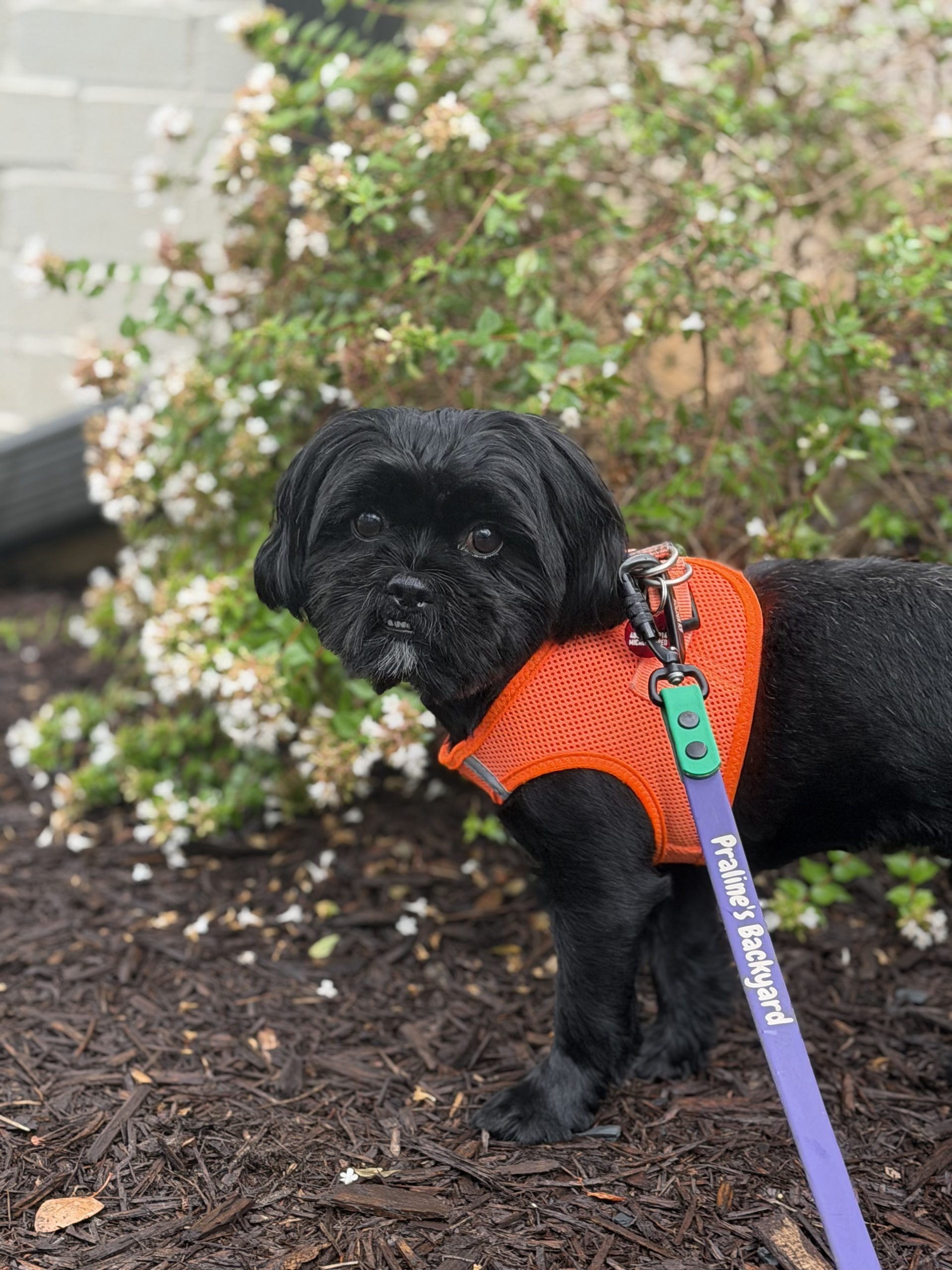
You brought home a new puppy. You already love them. Then Monday comes, and your first meeting starts at 9.
Who takes your puppy out at 11? What about 2?
A good puppy walking schedule in Atlanta answers those questions before they turn into worry. It plans potty breaks around your puppy’s age and your real workday, and it keeps young paws safe until your vet says yes to walks.
Here’s the goal. You walk in at 5:30, and a calm, happy puppy trots over to meet you. You spent the day focused on work, and photos from your puppy’s afternoon are already on your phone.
Let’s build your schedule step by step. You’ll find a sample weekday you can copy further down.
Step 1: Start with your vet’s plan
Your vet sets the timeline for walks.
Puppies get a series of core vaccines. The series usually starts at 6 to 8 weeks. After that, there’s a new round every 2 to 4 weeks until your puppy is older than 16 weeks, according to the American Animal Hospital Association (AAHA). AAHA notes that a last dose at 18 to 20 weeks may be better in areas where distemper risk is high.
Until your vet says your puppy is protected, stay away from places where lots of unknown dogs go. The American Veterinary Society of Animal Behavior (AVSAB) says young puppies should skip dog parks. They should also skip other spots that aren’t cleaned or that get lots of dogs whose vaccines are unknown.
In Atlanta, that means a few things:
- Piedmont Park’s off-leash dog parks can wait. Their rules don’t allow puppies under 16 weeks at all.
- Pick one potty spot that few other dogs use. Ask your vet about the safest choice for your home, especially if your building has a shared dog area.
The BeltLine can wait too. There’s more on that below.
Don’t put socialization on hold, though. AVSAB calls the first three months of life the most important time for it. Puppy classes can start as early as 7 to 8 weeks. Your puppy needs at least one set of vaccines at least 7 days before the first class, plus a first deworming. Ask your vet which clean, calm places are right for your puppy now.
Step 2: Plan potty breaks by age
Potty breaks hold the whole schedule together.
AKC gives a simple guideline. A puppy can hold it for about as many hours as their age in months, plus one. Treat that as the longest stretch, and plan breaks well before it.
| Puppy’s age | Longest wait (AKC guideline) | If you’re out from 8:30 to 5:30 |
|---|---|---|
| 2 months | About 3 hours | 2 to 3 midday breaks |
| 3 months | About 4 hours | 2 midday breaks |
| 4 months | About 5 hours | 1 to 2 midday breaks |
| 5 months | About 6 hours | 1 midday break |
| 6 months | About 7 hours | 1 midday break |
When you’re home, go out more often. AKC suggests taking a puppy out every hour during potty training. Puppies also need to go right after they eat or wake up, and play gets things moving too.
Every puppy is different. An accident is a sign to adjust the schedule. Your puppy is still learning.
Step 3: Keep walks short and sniffy
Once your vet clears walks, the Royal Kennel Club suggests about 5 minutes of walking per month of age, up to twice a day. AKC’s puppy exercise guide shares the same rule. That’s about 15 minutes for a 3-month-old and 20 minutes for a 4-month-old.
Let your puppy sniff. At Praline’s Backyard, sniff walks are part of our Tactile & Sensory pillar. Sniffing gives a young brain real work to do. A trainer quoted by AKC suggests a “sniffari,” where your puppy hunts for kibble in the yard.
Skip jogging for now. AKC warns that too much hard, steady exercise while a puppy is growing may lead to bone and joint problems later, especially with a lot of running on hard surfaces. AKC suggests waiting to jog together until your dog is grown. That’s about 6 to 8 months for small breeds and up to 18 to 24 months for giant breeds.
Watch your puppy as you go. If they sit down or start to nip, it’s time to head home. A tired puppy isn’t always a happy puppy. AKC warns that too much stimulation and exhaustion can lead to “unfortunate behavior.”
Your dog does not just need to be tired, your dog needs to feel fulfilled.
Step 4: Plan around Atlanta heat
Atlanta’s hot season runs from about late May to mid-September. During that stretch, the average daily high stays above 81°F. July is the hottest month, with an average high of 88°F. It also has the most muggy days of the year, according to Weather Spark.
That heat matters for small paws. On a sunny 77°F day, pavement can reach 125°F. At that temperature, paw pad burns can happen in as little as 60 seconds, according to vet-reviewed guidance from Chewy.
Your summer walk plan:
- Walk early in the morning or later in the evening.
- Do the 7-second test. Press the back of your hand flat on the pavement. If you can’t keep it there for 7 seconds, it’s too hot for your puppy’s paws.
- Choose shade and grass when you can.
- Bring water, and keep summer walks short.
Grass has its own Georgia catch: fire ants. UGA Extension reports imported fire ants in almost every Georgia county. They like open, sunny spots such as parks and lawns. Look for dirt mounds before your puppy settles in for a good sniff.
Cooler months are a great time for longer sniff walks, once your vet gives the okay.
Step 5: Choose calm routes
Where you walk matters as much as when. For a young puppy, a shady side street in Grant Park or Virginia-Highland is a better fit than a busy trail. There’s plenty to sniff, and less to take in all at once.
The BeltLine is a great walk later on. Right now, it can be a lot. The Atlanta BeltLine gets more than two million visits a year, and you share the trail with bikes and scooters.
Keep your puppy on a leash. Atlanta city code (Sec. 110-70) requires leashes in parks, except in marked off-leash areas. BeltLine rules require leashes too.
Pick one or two routes and repeat them. A familiar route helps a young puppy feel safe while they learn about the world.
Step 6: Fill the time between walks with enrichment and rest
Puppies usually sleep 18 to 20 hours a day, and they may nap about every hour, according to AKC. So a good schedule is mostly rest, with short bursts of activity.
Give your puppy a quiet, dim place to nap, like a crate or a dog bed in a calm corner.
Between naps, keep enrichment short and simple. Our THRIVE framework has ideas for every part of the day:
- Tactile & Sensory: scent games, novel textures
- Health & Movement: short, gentle games of tug
- Rooted Instincts: lick mats, slow feeders, scatter feeding, nylon chew toys
- Intellectual Growth: short training sessions, puzzle feeders
- Vital Balance: frozen lick mats, wind-down routines, safe spaces, calm reinforcement
- Engagement & Bonding: bonding games, grooming sessions
Not sure which pillar your puppy leans toward? Take the free THRIVE Profile quiz. It takes about two minutes.
A sample puppy walking schedule in Atlanta (3-month-old)
Here’s a weekday for a 3-month-old puppy whose dog parent is out from 8:30 to 5:30. Two midday visits come from a Canine Enrichment Specialist (CES). No gap runs longer than about 4 hours.
| Time | What happens | Who |
|---|---|---|
| 6:30 am | Wake up. Straight outside for a potty break. | You |
| 6:45 am | Breakfast in a slow feeder, then a potty break. | You |
| 7:15 am | A few minutes of training and play, then a potty break. | You |
| 7:45 am | Nap in their quiet spot. | Your puppy |
| 8:25 am | Potty break before you leave. | You |
| 11:15 am | In-home visit: potty break, play, a scent game, calm time before a nap. | Your CES |
| 2:15 pm | In-home visit: potty break, a lick mat, bonding games, then nap time. | Your CES |
| 5:30 pm | You’re home. Potty break right away. | You |
| 6:00 pm | Dinner, then a potty break. | You |
| 7:00 pm | Sniff time and a potty break once the pavement cools. Make it a short walk if your vet has cleared it. | You |
| 8:00 pm | A short grooming session and some quiet play. | You |
| 9:00 pm | Potty break, then your wind-down routine. | You |
| 10:30 pm | Last potty break, then bed. | You |
| 2:30 am | A quick, quiet potty break, then back to bed. | You |
A few notes:
- Follow your vet’s feeding plan. If it includes a midday meal, build it into a midday break.
- As your puppy grows, stretch the gaps. By 5 or 6 months, one midday visit may be all you need.
Late meetings and work trips happen, so your plan needs a backup that doesn’t depend on you.
How Praline’s Backyard fits into your puppy’s day
The hardest part of any puppy schedule is the middle of the day. You need someone you can trust, every day, who follows your puppy’s plan the way you would.
Praline’s Backyard Dog Services is in its sixth year of caring for Atlanta dogs. Our team cares for dogs within 7 miles of Midtown, in neighborhoods from Old Fourth Ward and Inman Park to West End and Kirkwood. Your CES is more than JUST a Dog Walker. You get a trusted team assigned to your dog.
How we care for young puppies: We start with in-home visits for potty breaks, play and enrichment. Neighborhood walks begin once your vet clears your puppy. Even before that first walk, every visit is care that matches the dog in front of us.
With our Balanced membership, you stop counting visits:
- Unlimited visits, 7 days a week.
- One visit is set up for you every day. Need more while your puppy is little? Add them in the app at no extra charge.
- A daily report card with photos and video, starting with your very first visit.
- GPS tracking on every visit.
- Dog taxi visits to vet appointments, so vaccine visits don’t pull you away from work.
- An Enrichment Toy of the Month, picked for your puppy.
- A birthday field trip with a photoshoot and a pup cup, plus a year-end photo book.
Home access and your puppy’s routine get set up with you once, before the first visit. After that, you don’t have to book each day.
Here’s what peace of mind looks like: a photo of your puppy asleep in their bed at 2:30 pm, sent while you’re in a meeting.
Clients have praised our attention to detail. We open 10 new memberships a month. That limit gives every CES time to know each dog by name.
And with our Happy Home Guarantee, you can try Balanced for 30 days. If you’re not completely happy, we refund your first month in full.
Your next step takes 15 minutes
Book your free 15-minute call. Tell us about your puppy and your workday. We’ll talk through a schedule that fits. You don’t need anything figured out before we talk.
Once we’ve met your puppy, care can start within days.
Puppy walking schedule FAQ
How often should I walk my puppy? Until your vet clears walks, focus on potty breaks, play and enrichment at home. After that, start with about 5 minutes of walking per month of age, up to twice a day. Plan potty breaks by your puppy’s age.
When can my puppy start going on walks in Atlanta? When your vet says so. Core puppy vaccines usually continue every 2 to 4 weeks until your puppy is older than 16 weeks. Piedmont Park’s off-leash dog parks don’t allow puppies under 16 weeks.
How long can my puppy wait between potty breaks? AKC’s guideline is about one hour longer than their age in months. A 4-month-old can wait about 5 hours at most.
How do I know if the pavement is too hot? Use the 7-second test. If the pavement is too hot for the back of your hand, it’s too hot for paws. On a sunny 77°F day, pavement can reach 125°F.
Do you care for puppies who haven’t finished their vaccines? Yes. Young puppies start with in-home visits for potty breaks, play and enrichment. Neighborhood walks begin once your vet clears your puppy.
Where do you offer puppy care? We serve Atlanta neighborhoods within 7 miles of Midtown. See our service area.